
Live Webinar: Positive Affect Intolerance
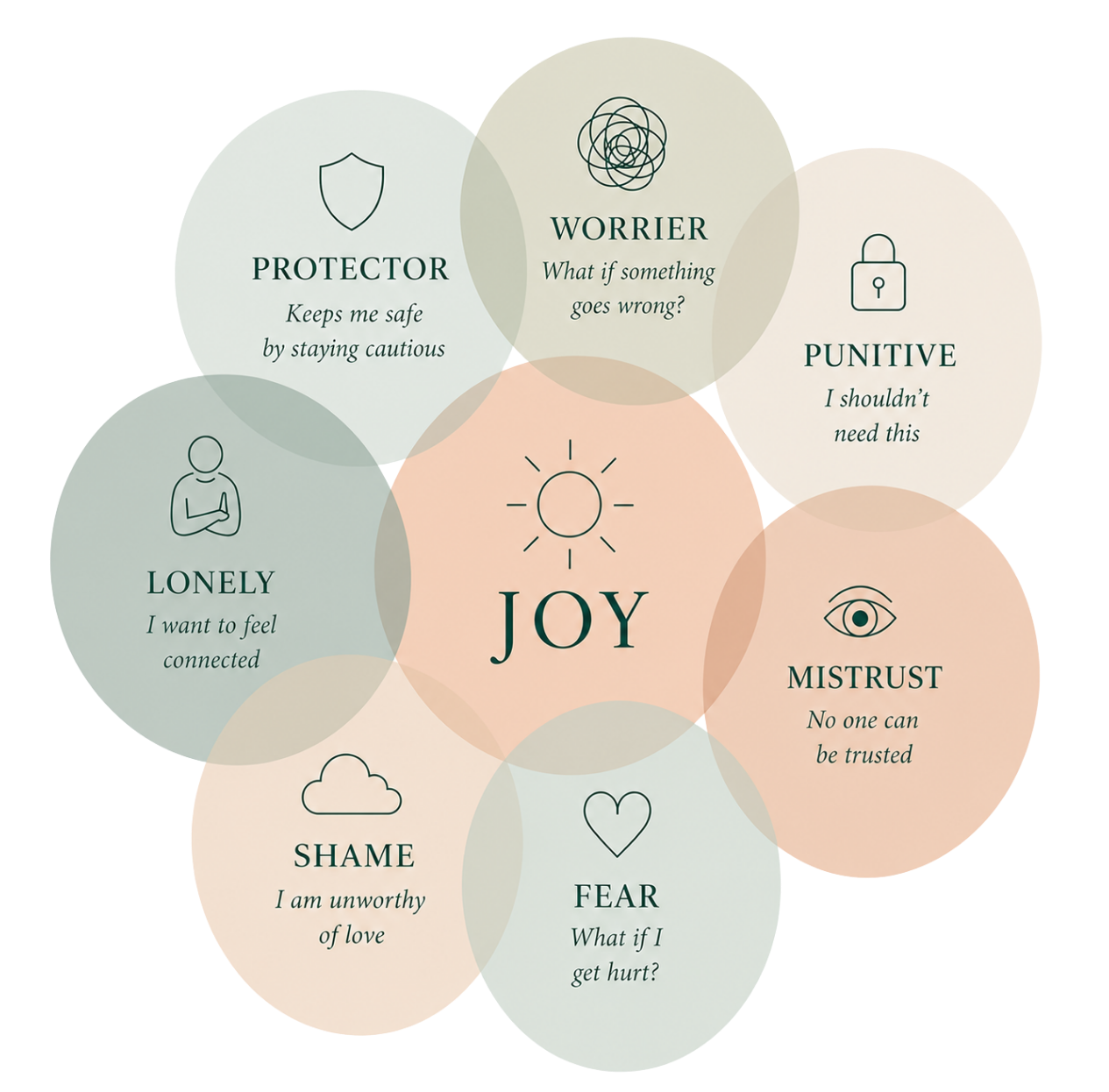
When Feeling Better Feels Unsafe
Recognising and Working with Positive Affect Intolerance
Live webinar presented by Caroline Burrows and Kate Formston
28 October 2026 | 6-9pm AEDT
$215 inc. GST. Includes webinar recording
Does this sound familiar?
Have you ever found yourself wondering...
Why does my client pull away just as things are improving?
Why can warmth, empathy, or validation sometimes feel threatening?
Why does resourcing seem ineffective for some clients?
Why do some clients seem ambivalent about healing?
Why does therapy sometimes stall just as clients begin to feel safer?
If so, you're not alone.
These are common experiences for therapists working with trauma and complex trauma, yet they're often misunderstood. Rather than reflecting resistance or a lack of motivation, these patterns may represent protective adaptations that have developed in response to earlier experiences.
This webinar explores why healing itself can sometimes feel unsafe, and how recognising positive affect intolerance can help us respond with greater understanding, compassion, and clinical effectiveness.

Webinar Overview
One of the more perplexing experiences in trauma therapy is when clients begin moving towards healing, only to suddenly pull away. Perhaps therapy starts to feel more connected. They begin engaging in trauma processing, experience moments of hope, self-compassion, or genuine progress, then unexpectedly become self-critical, disengage, avoid therapy, or lose momentum.
Why does this happen?
This advanced webinar explores positive affect intolerance and why experiences such as joy, pride, self-compassion, safety, connection, and receiving care can feel threatening for some clients.
Drawing on attachment theory, trauma, EMDR, parts work, interpersonal neurobiology, and current understandings of positive affect intolerance, we'll explore why the nervous system can come to experience healing itself as unsafe, and how therapists can respond with greater understanding, flexibility, and compassion.
Whether you're an EMDR therapist or work within another trauma-informed approach, this webinar offers a practical framework for recognising and working with clients who seem "stuck" just as therapy begins to move forward.

Why this webinar matters
Positive emotional experiences are often viewed as signs of healing, yet for many clients they can activate fear, shame, aversion, vigilance, or protective defences.
Experiences such as joy, hope, self-compassion, connection, or receiving care may feel just as threatening as painful emotions, particularly for people who have experienced complex trauma or attachment wounds.
When these protective responses go unrecognised, they can become obstacles to therapy. Clients may struggle to engage fully in resourcing, attachment-focused interventions, trauma reprocessing, or other experiences intended to support healing.
By recognising positive affect intolerance, therapists can better understand these protective patterns and respond in ways that gradually increase clients' capacity for safety, connection, and lasting therapeutic change.

What you’ll learn
By the end of this webinar, you'll be able to:
Understand how positive affect intolerance can develop through trauma, attachment, shame, and protective adaptations.
Recognise when clients may fear joy, pride, hope, self-compassion, safety, or receiving care.
Identify how positive affect intolerance can emerge during parts work, resourcing, attachment-focused interventions, trauma reprocessing, and within the therapeutic relationship.
Understand why some clients become ambivalent about healing despite wanting things to change.
Develop practical strategies for working with protective parts that fear safety, connection, vulnerability, or recovery.
Help clients gradually build tolerance for positive emotional experiences without overwhelming their nervous system.
Feel more confident working with clients whose progress repeatedly stalls as therapy begins to move forward.

Webinar presenters

Caroline Burrows is an Accredited EMDR Trainer, Consultant, Clinical Social Worker, and Director of Caroline Burrows EMDR Training & Consultation. She is passionate about helping therapists develop confidence in working with trauma through practical, engaging, and clinically grounded training.
Caroline has extensive experience in attachment-focused EMDR, dissociation, parts work, and complex trauma. She combines current research with extensive clinical experience, bringing a warm, down-to-earth approach that encourages curiosity, reflection, and practical application.

Kate Formston is an Accredited EMDR Consultant, Accredited Mental Health Social Worker, and Psychotherapist with more than two decades of experience supporting individuals affected by trauma and other mental health challenges.
Kate provides EMDR consultation to therapists at all stages of their learning and works alongside Caroline in her EMDR training workshops. She has extensive experience in attachment-focused therapy, ego state therapy, dissociation, and complex trauma, and brings a thoughtful, compassionate approach to helping therapists navigate challenging clinical presentations.
Ready to join us?
Date: Wednesday 28 October 2026
Time: 6-9pm AEDT
Location: Online (via Zoom)
Investment: $215 inc. GST
Recording: The webinar will be recorded, and registrants will receive ongoing access to the recording and resources.